The elbow is prone to painful maladaptive degeneration of the tendon attachments. These are typically of insidious onset but precipitating factors may be identified from a careful history.
- Lateral epicondylitis
- Medial epicondylitis
- Distal biceps tendinopathy
- Baseball pitcher’s elbow
Lateral Epicondylitis
- Also known as tennis elbow
- This is the most common tendinopathy
- Pain originates from the origin of ECRB (extensor carpi radialis brevis) at the lateral epicondyle
- Most cases occur in those with a history of racquet use
- Sudden traumatic onset of pain -> tendon rupture -> often requires repair
- Usually occurs in active person aged 40-55 years
Clinical features
- Lateral elbow pain
- Often after a period of unaccustomed activity
- Radiation down the forearm
- Elbow stiffness in the morning
- Pain is aggravated by lifting objects
- ROM - full
- Tenderness
- Palpation over the front of the lateral epicondyle
- Maudsley’s test -> resisted middle finger extension
- Mill’s sign -> elbow extension in pronation with a flexed wrist
Diagnosis
- Imaging is not required except
- At the extremes of age
- History of trauma
- History of mechanical symptoms e.g. locking
- USG / MRI
- In patients with long-standing symptoms, not responding to treatment
- To exclude radial tunnel syndrome, radiocapitellar plica or PLRI (postero-lateral rotator instability)
Treatment
It spontaneously resolves within 12 months in 90% cases.
Non-operative
- Activity modification -> identify and avoid precipitating factors
- Physiotherapy -> eccentric loading regime for the common wrist extensors
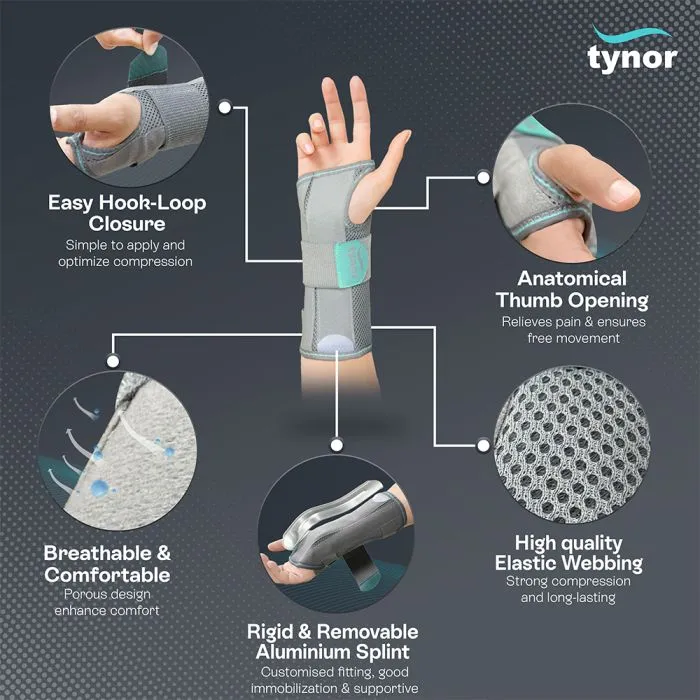
- Static wrist splint
- Steroid injection
- Provides short-term pain relief
- Recurrence rates are high
- The elbow is more likely to be painful in the long term
Operative
- Tendon debridement
Medial Epicondylitis
- Also known as golfer’s elbow
- More resistant to treatment
- Pain at the medial epicondyle from the origin of the pronator teres
- Tenderness
- Over the medial epicondyle
- On resisted forearm pronation in extension
- Treatment is same as lateral epicodylitis, outcome of surgery is less predictable and more prone to complications
Distal Biceps Tendinopathy
- In individuals going to the gym to lift weights into their forties and fifties
- Anterior elbow pain & pain on resisted forearm supination
- Treatment is as for tennis elbow, except that, if surgery is required, the tendon is reattached after debridement.