This comprises of at least four conditions
- supraspinatus impingement and tendinitis
- tears of the rotator cuff
- acute calcific tendinitis
- biceps tendinitis and/or rupture.
Symptoms
- pain and/or weakness during certain movements of the shoulder.
- Pain may have started recently, sometimes quite suddenly, after a particular type of exertion; the patient may know precisely which movements now reignite the pain and which to avoid.
Rotator cuff pain
- over the front and lateral aspect of the shoulder
- during activities with the arm abducted and medially rotated
- may be present even with the arm at rest
- tenderness is felt at the anterior edge of the acromion.
| site | association |
|---|---|
| in front along the delto-pectoral boundary | biceps tendon |
| over the top of the shoulder | acromio-clavicular pathology |
| at the back along the scapular border | cervical spine |
Rotator Cuff Anatomy
The rotator cuff comprises the lateral portions of the infraspinatus, teres minor, supraspinatus and subscapularis muscles and their conjoint tendon which is inserted into the greater and lesser tuberosity of the humerus.
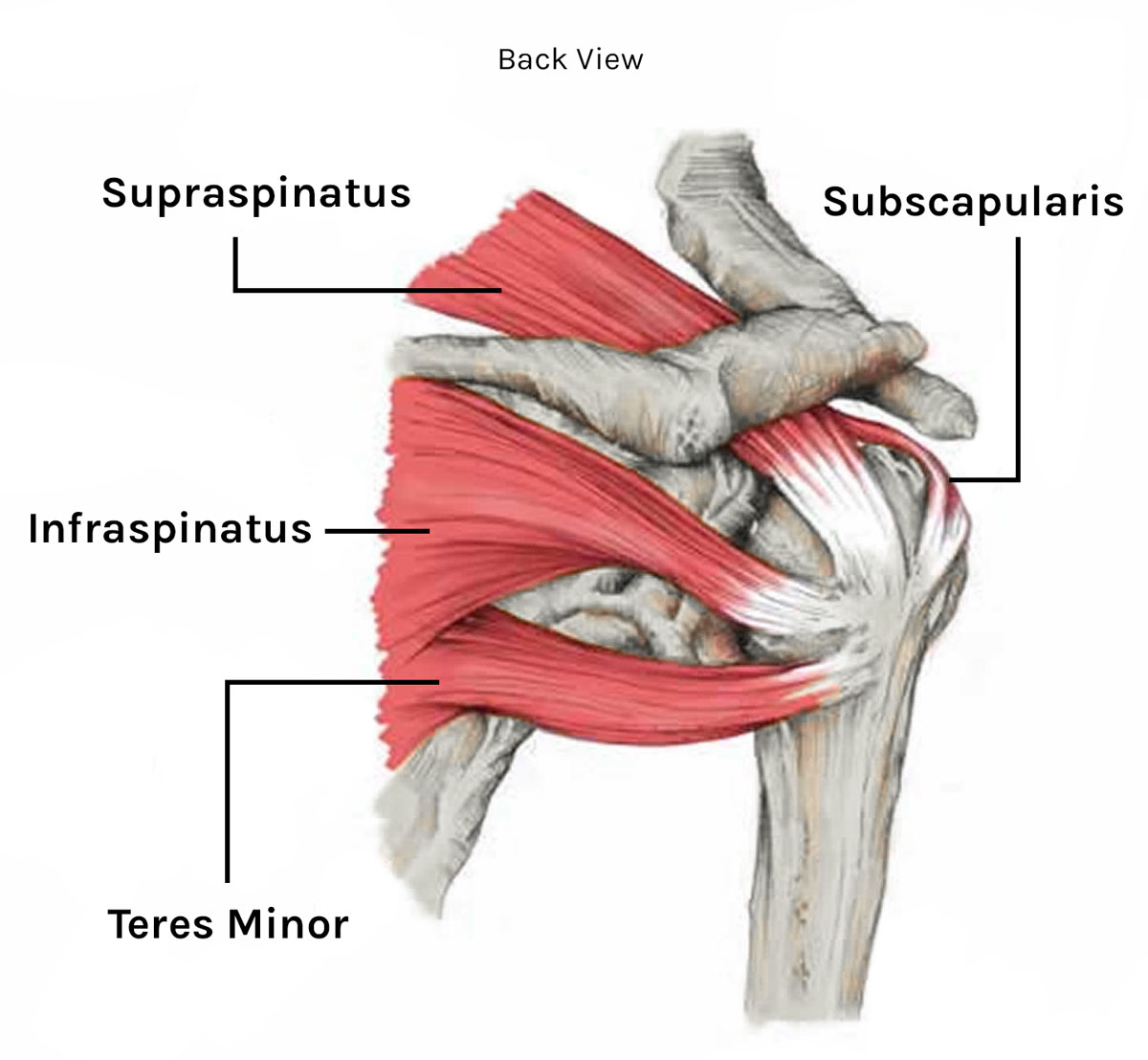
The musculotendinous cuff passes beneath the coraco-acromial arch.
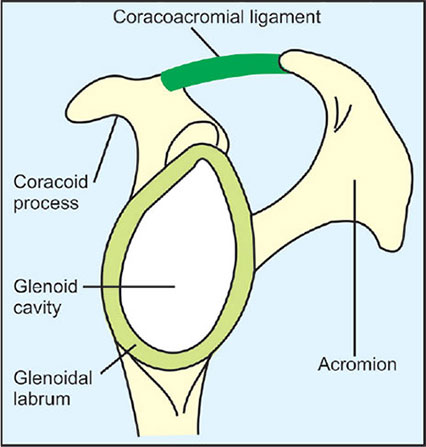
Coraco-acromial arch
- formed by the undersurface of the acromium and the coracoacromial ligament
- separated from the rotator cuff by the subacromial bursa
- during abduction of the arm the cuff slides under the arch